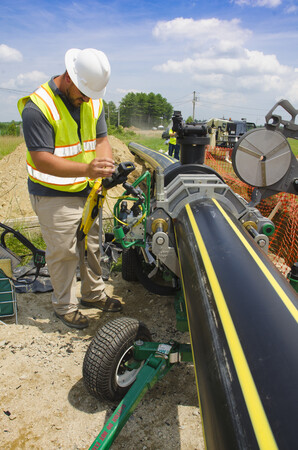
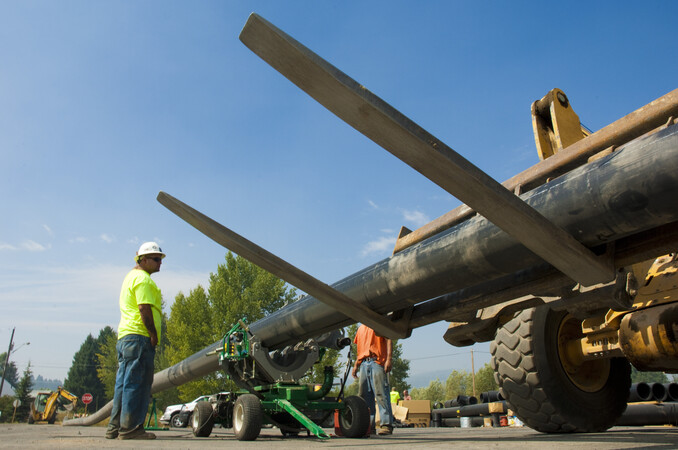
Built for operators and contractors who need dependable fusion capability that can move with the job, the McElroy Rolling 412 provides a self-contained platform for joining thermoplastic piping in demanding construction environments.
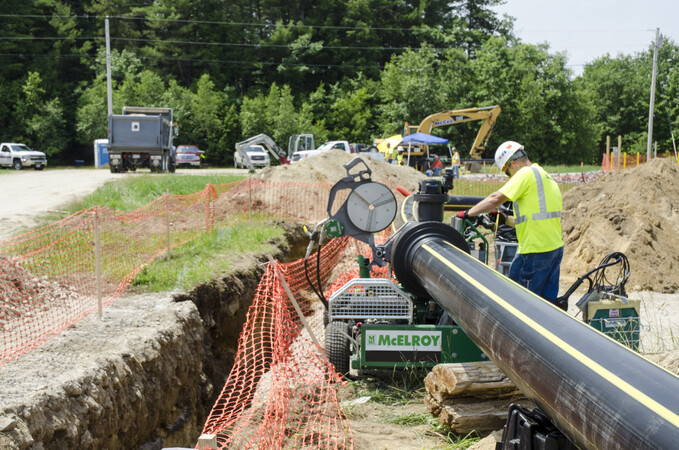
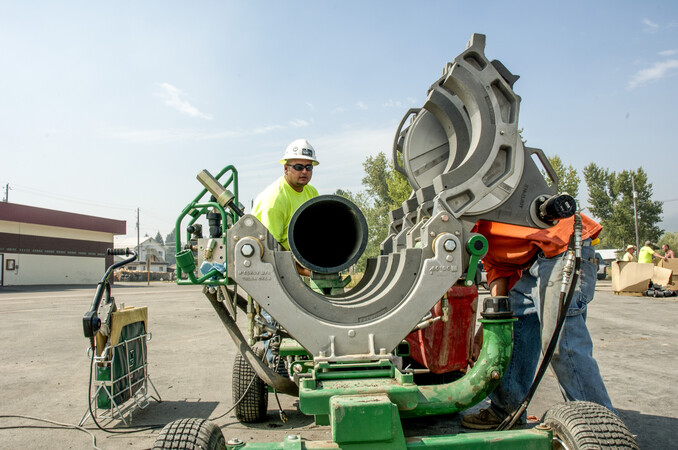
Its wheeled chassis uses high-flotation inflatable tires and a towing ring to simplify positioning around the jobsite. When fusion work needs to take place away from the vehicle or down in a ditch, the carriage can be removed and configured as either a 3-jaw or 4-jaw assembly.
The Rolling 412 is offered in High Force, Medium Force and Low Force configurations, allowing contractors and purchasing teams to select a machine appropriate for their pipe system and fusion requirements. Manual- and hydraulic-clamping models are available, as are electric configurations.
A hydraulic facer prepares pipe ends for alignment and fusion, while McElroy's Centerline Guidance System helps distribute force around the joint. Compatibility with the McElroy DataLogger® also gives contractors an option for capturing and maintaining fusion-joint records.
What pipe sizes can the McElroy Rolling 412 fuse?
The machine covers pipe from 4" IPS through 12" DIPS (110 mm to 340 mm).
Can the Rolling 412 be used for in-ditch fusion?
Yes. Its carriage can be removed from the rolling chassis for fusion operations away from the vehicle. The carriage can be operated in 3-jaw or 4-jaw configurations, providing additional flexibility where working space is limited.
Is hydraulic clamping available?
Yes. McElroy offers Rolling 412 models with hydraulic clamping as well as models with manual clamping.
What force configurations are available?
For underground/construction applications, McElroy lists High Force, Medium Force and Low Force versions. The correct configuration depends on the pipe, material, dimensional standard and applicable fusion procedure.
Does the Rolling 412 have a hydraulic facer?
Yes. The machine uses a hydraulically powered facer designed to prepare pipe ends efficiently before heating and fusion.
Can fusion-joint information be recorded?
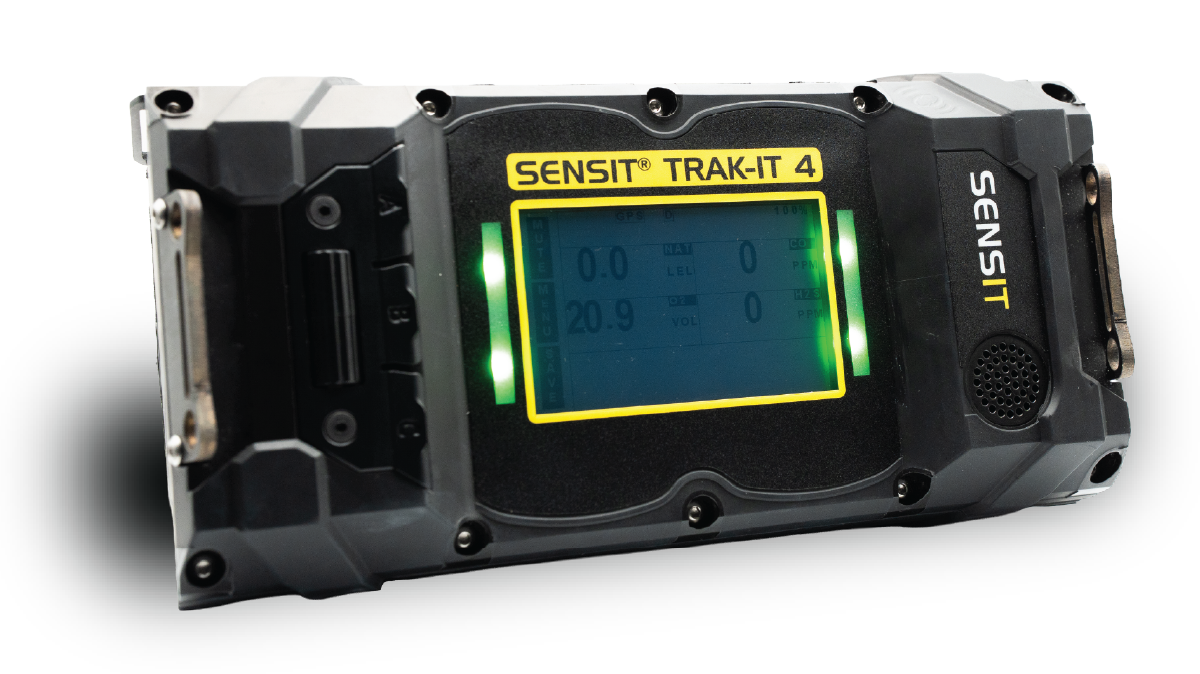
The Rolling 412 is compatible with the McElroy DataLogger®, allowing fusion operations to incorporate electronic joint documentation when appropriately equipped.
How is the machine moved around a construction site?
The Rolling 412 rides on high-flotation inflatable tires and incorporates a towing ring for jobsite repositioning. McElroy lists a vehicle speed of up to 5 mph.
How much does the Rolling 412 weigh?
Weight depends on configuration. For example, McElroy lists the current electric hydraulic-clamping machine at approximately 1,405 lb. (637.3 kg) and the electric manual-clamping machine at approximately 1,365 lb. (619.2 kg). Component and shipping weights also vary by configuration.
What should be specified when ordering?
Confirm the required cylinder force, clamping style, power configuration, pipe sizes/inserts and any accessories or fusion-data requirements. This helps ensure the machine is correctly equipped for the intended pipe system and project specifications.